

TECHNICAL SUPPORT


Published 2026-01-19
Have you ever had such an experience? Want to find a suitable servo for a small robot project, but looking through various specifications, but getting more and more confused? Speed, torque, voltage range...a bunch of parameters are in front of me. I feel that each one is important, but I don't know which one is the most critical. Not to mention that the data formats provided by different manufacturers are different, and comparing them is like solving a puzzle.

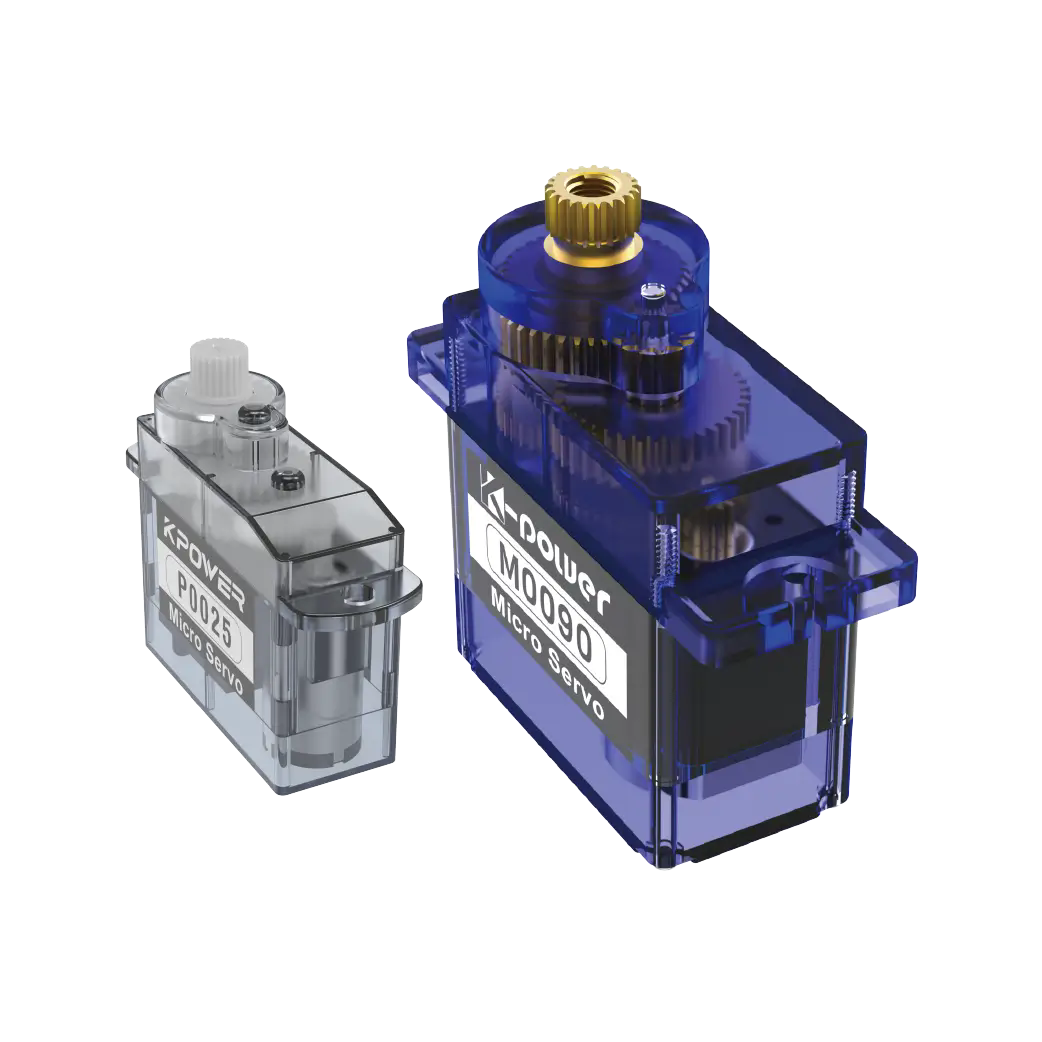
Speaking of which, you may be holding several SG90 servo specifications from different brands and comparing them. This type of micro-servos are common in production, small robotic arms, and even creative interactive devices. But to be honest, some technical documents read like a bible - either the parameters are incomplete or the test conditions are vague. You can only choose based on your feeling, but after installing it, you find that the torque is not enough, or the response speed is half a beat slower, and the progress of the entire project is slowed down.
Let’s talk about the ideal situation first. When you open a servo specification sheet, what do you most expect to see? The key parameters can be found at a glance: What is the working voltage? How much locked-rotor torque is there? What is the no-load speed per minute? These basic data are like the ID card of the steering gear, clear and clear.
But basic data alone is not enough. For example, for the parameter torque, many documents only write the maximum value, but do not explain at what voltage it was measured. In fact, for the same servo, the torque can be significantly different between 4.8V power supply and 6V power supply. There is also the speed, some write the no-load speed, and some write the load speed, the difference between them is huge.
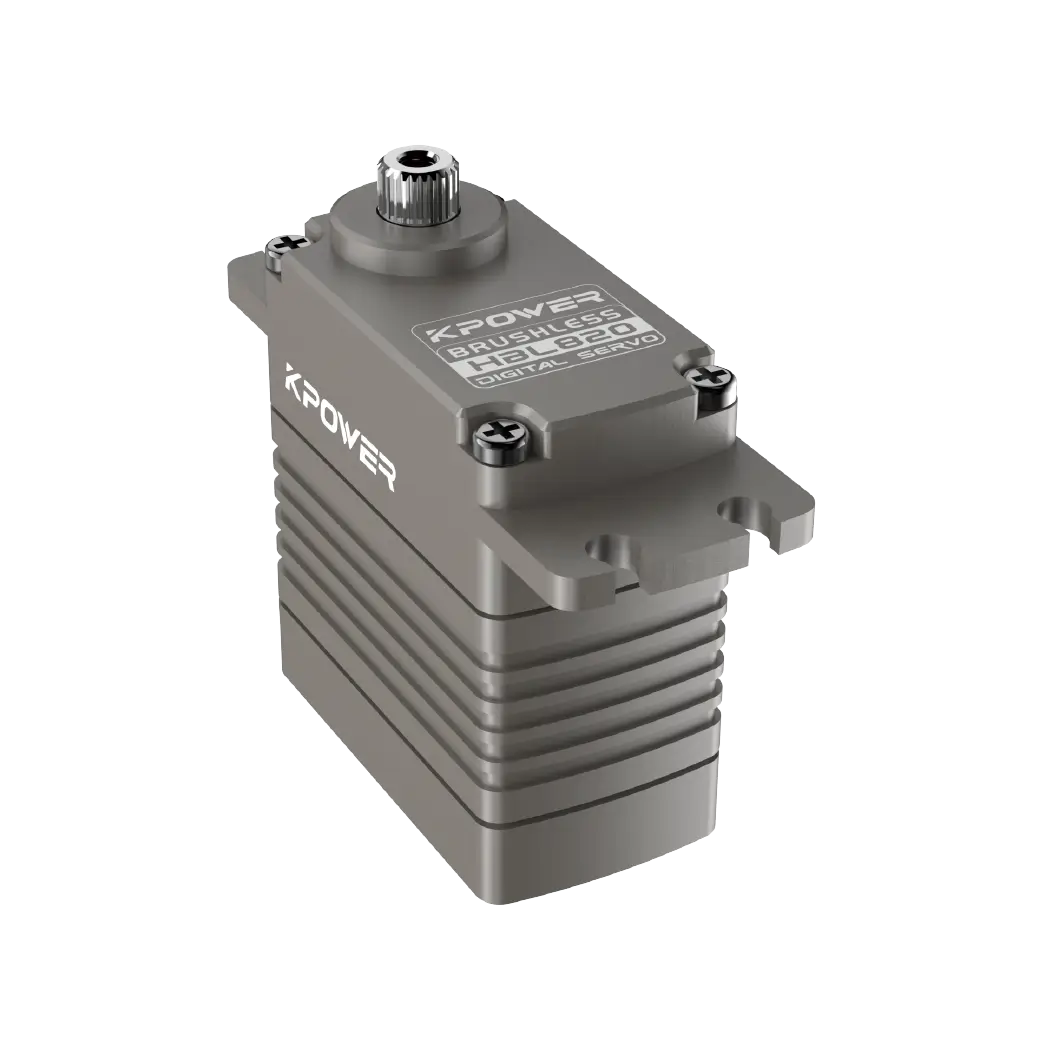
Good technical documentation will clearly mark these test conditions. Just like the SG90 specification sheet provided by Kpower, it not only lists the standard parameters, but also marks the performance changes under different voltages. You will know at a glance: Oh, if it is powered by 5V, the torque is about 1.6kg·cm; if it is reduced to 4.8V, it will be reduced to about 1.5. This kind of transparency makes you feel confident when designing circuits.
In addition to the main parameters, there are also some details that are often hidden in the corners of the document, but directly affect the user experience. Like operating temperature range – sounds theoretical, right? But if you install the servo in an outdoor device, the temperature of the outer shell can easily exceed 50 degrees under direct sunlight in summer. At this time, the temperature range is very important. Or when used in outdoor projects in the northern winter, will the plastic gears become brittle in an environment of more than ten degrees below zero? Will the grease solidify? These need to be found in the specification book.
Another example is signal response time. Some documents don't mention this at all, but if you actually use it, you will find that when a control signal is given, the servo will always be delayed by tens of milliseconds before moving. For situations where quick response is required, this delay is critical. A good specification book will list the response characteristics separately, and even give angle curves under different pulse widths.
Also has size chart. Many specifications books only draw a rough outline, but the key installation dimensions such as screw hole positions, cable outlet directions, and axis height are ambiguous. As a result, you design the structural panels according to inaccurate dimensions, only to find out when they are assembled that they don't match up, and you have to rework and modify them. Complete and accurate mechanical drawings can save you these troubles.
Looking at the parameters is one thing, but how to translate these numbers into actual performance in the project is another. For example, the specification says "locked rotor torque 1.8kg·cm", what does this mean? Intuitively speaking, this means that a 1.8 kg weight can be lifted at the end of a 1 cm long lever - of course this is a theoretical value, and it is best to leave some margin in actual use.
But torque is not always better. More torque usually means more current consumption, and your power module may need to be upgraded. Moreover, the space of the micro servo itself is limited, and torque and size often need to be weighed. At this time, you need to make a choice based on your specific application: Do you need quick response or power? Or do you need to find a balance between the two?
The same is true for the speed parameters. The performance difference between 60 rpm and 100 rpm on a small robotic arm is very obvious. The former's movements are calm and soft, suitable for precise positioning; the latter's movements are crisp and clean, suitable for quickly switching positions. But higher rotational speeds are often accompanied by subtle changes in positioning accuracy - this does not mean that the accuracy will be reduced, but that the control strategy under high-speed movement needs to be adjusted.
Q: The working voltage range is 4.8-6V, which voltage is better? A: It depends on your needs. At 6V, the maximum torque and speed are the fastest, but the heat will also increase; at 4.8V, it is the gentlest and may have a longer life. 5V is a good balance in most cases - especially if you're running from a common USB power supply or a microcontroller.
Q: How to choose between plastic gears and metal gears? A: Plastic gears run quieter and cost less, and are suitable for situations where the load is not large. Metal gears are more durable and can withstand sudden large loads, but they are louder and more expensive. Kpower's SG90 is available in two versions. When choosing, you should mainly consider whether your usage scenario often has impact loads.
Q: Why do different servos feel different when using the same parameters? A: In addition to the paper parameters, there are many factors that affect the actual performance: the degree of the control circuit, the processing accuracy of the gear set, the matching of the motor, etc. These may not be written in detail in the specification, but they do make a difference in the user experience. Sometimes you will find that of two servos with the same torque rating, one is stable when loaded, while the other starts to shake.
After all, reading technical documents is not for exams, but for solving problems. When you are faced with a specific project - such as an automatic tracking gimbal or a small door-opening mechanism - think clearly about what you need the servo to do, and then go to the documentation to find the corresponding parameter verification.
A good spec should help you answer these questions: Can my power supply drive it? Is it powerful enough to move my load? Can its speed keep up with my control rhythm? Do the installation dimensions match my structure? Will it function properly at the expected ambient temperature?
Kpower pays special attention to this practical orientation when organizing SG90 documents. It not only provides standard test data, but also adds many practical application considerations. For example, the impact on lifespan of working near extreme angles for a long time, or the recommended heat dissipation solution under high-frequency operation. These items may not appear in every specification, but they can certainly make your project go more smoothly.
Choosing a servo is like finding a partner—appropriate parameters are just the beginning, and true tacit understanding needs to be slowly broken in during actual use. A clear, complete, and honest technical document is a good start for this partnership. It won't promise what it can't do, but it will make it clear what it can do. That way you can trust it with the important stuff and focus on the more creative parts of the project.
Next time you pick up a servo specification sheet, ask yourself: What do I want to do with it? Then go to the documentation with this question to find the answer. You'll find that when you know what you're looking for, those numbers and graphs suddenly become much more familiar.
Established in 2005, Kpower has been dedicated to a professional compact motion unit manufacturer, headquartered in Dongguan, Guangdong Province, China. Leveraging innovations in modular drive technology, Kpower integrates high-performance motors, precision reducers, and multi-protocol control systems to provide efficient and customized smart drive system solutions. Kpower has delivered professional drive system solutions to over 500 enterprise clients globally with products covering various fields such as Smart Home Systems, Automatic Electronics, Robotics, Precision Agriculture, Drones, and Industrial Automation.
Update Time:2026-01-19

Contact Kpower's product specialist to recommend suitable motor or gearbox for your product.


