

TECHNICAL SUPPORT


Published 2026-05-12
Maybe the first time you encountered it was in a video played late at night. The light from the screen is reflected on your face. In the picture, there is an exquisitely crafted mechanical arm that is slowly lifting up, its fingers are slightly bent, and each bone joint makes a slight and steady buzzing sound. At that moment, your heartbeat paused, as if you were witnessing a sleeping life beginning to wake up. The source of this life's rhythm is usually hidden inside those inconspicuous, boxy plastic or metal boxes.They are embedded silently between the skeletons, using a thin wire to transmit instructions, converting cold electrical signals into precise angles.。Yes, it is indeed a servo, that "thing like a body part" that allows countless ideas to move gracefully.. However, when you actually enter this field and type "Steering gear pictures". A lot of information rushed over at once, like a large amount of water, but it instantly washed away the poetic-like artistic conception when we first met. What you felt was not the excitement when creating, but a particularly deep doubt: they all look similar, how should they be used? How to choose? Today, let us gently open this map, enter the inside of the servo, carefully examine the parts that are placed quietly, listen to their silent narration, and dispel the fog that blocks your view on the way to choose a model.
1. A gaze from the outside in
When talking about a steering gear, what exactly are we talking about? All stories start with that one glance. First, construct an observation dimension from the outside in in your mind. This is not only the order of observation, but also the ladder to understand the essence of the steering gear.
Amazing at first sight: the narrative of the shell
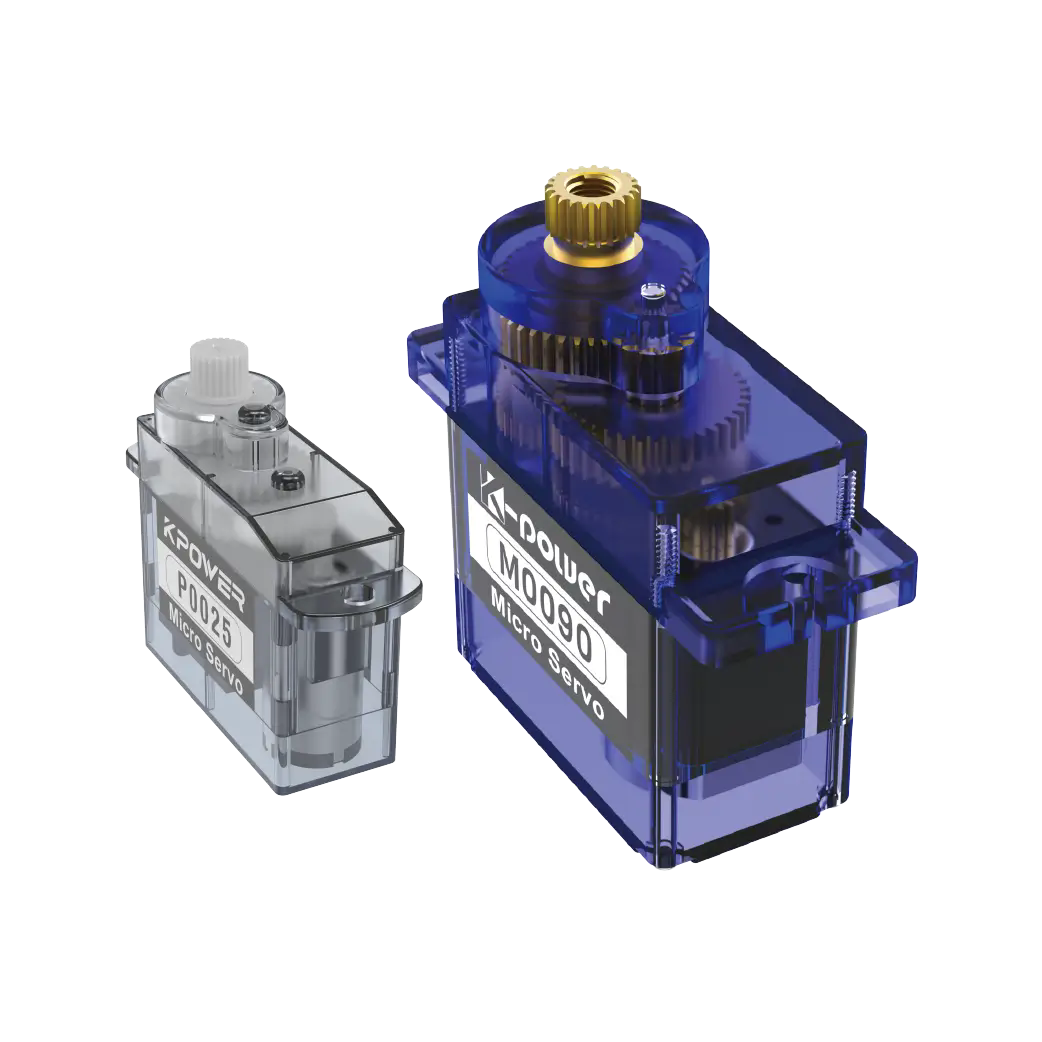
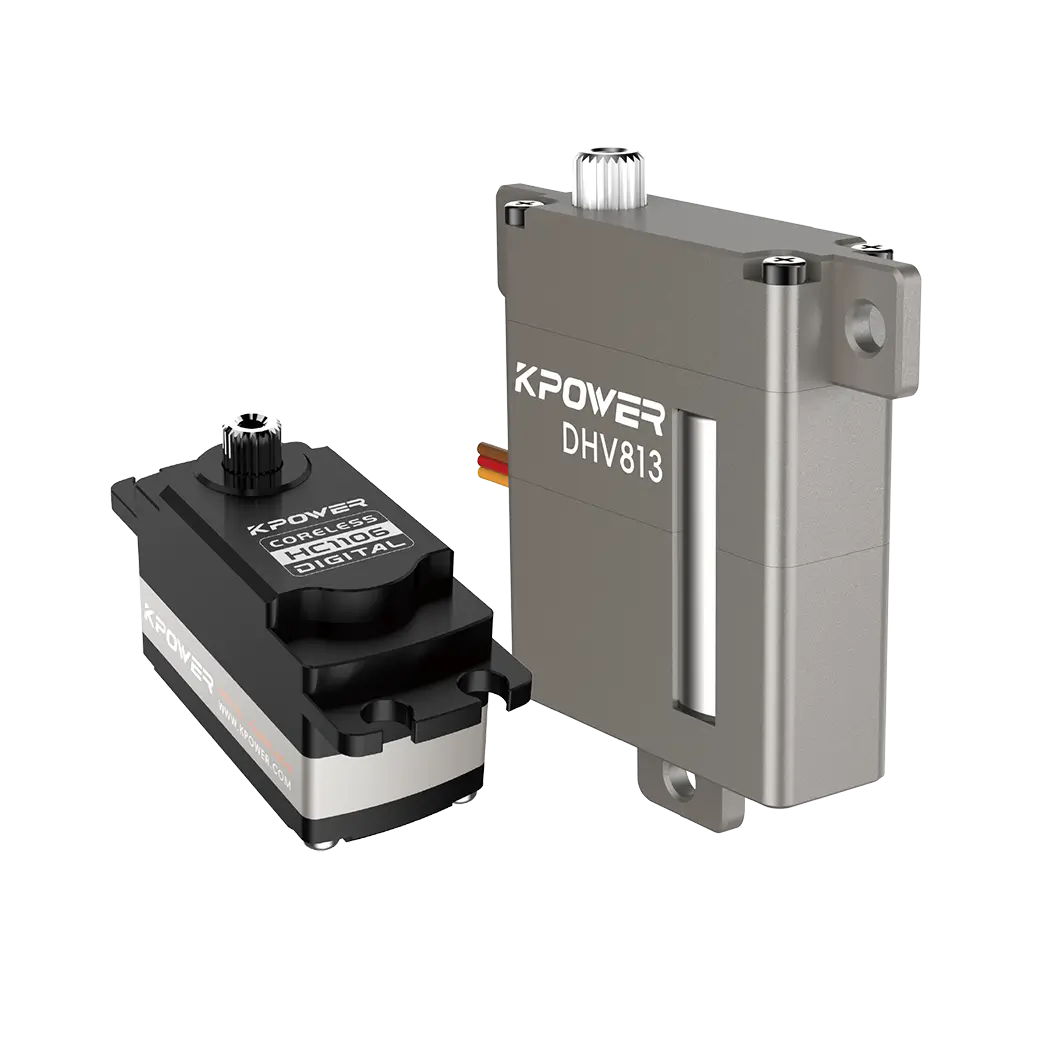
Please try to imagine that you are holding two servos firmly in your hands at this moment. First of all, it has an engineering plastic color with a warm texture all over, reflecting the unique soft appearance of matte texture under the reflection of light. Then you see, the other one is made of all-aluminum alloy that feels cold to the touch. The dents in the heat dissipation groove are like unique lines carefully carved and carved. You can feel the heavy weight when you hold it in your hand. Faced with such situations, how would you interpret them and make them work? That's a question worth thinking about, isn't it?
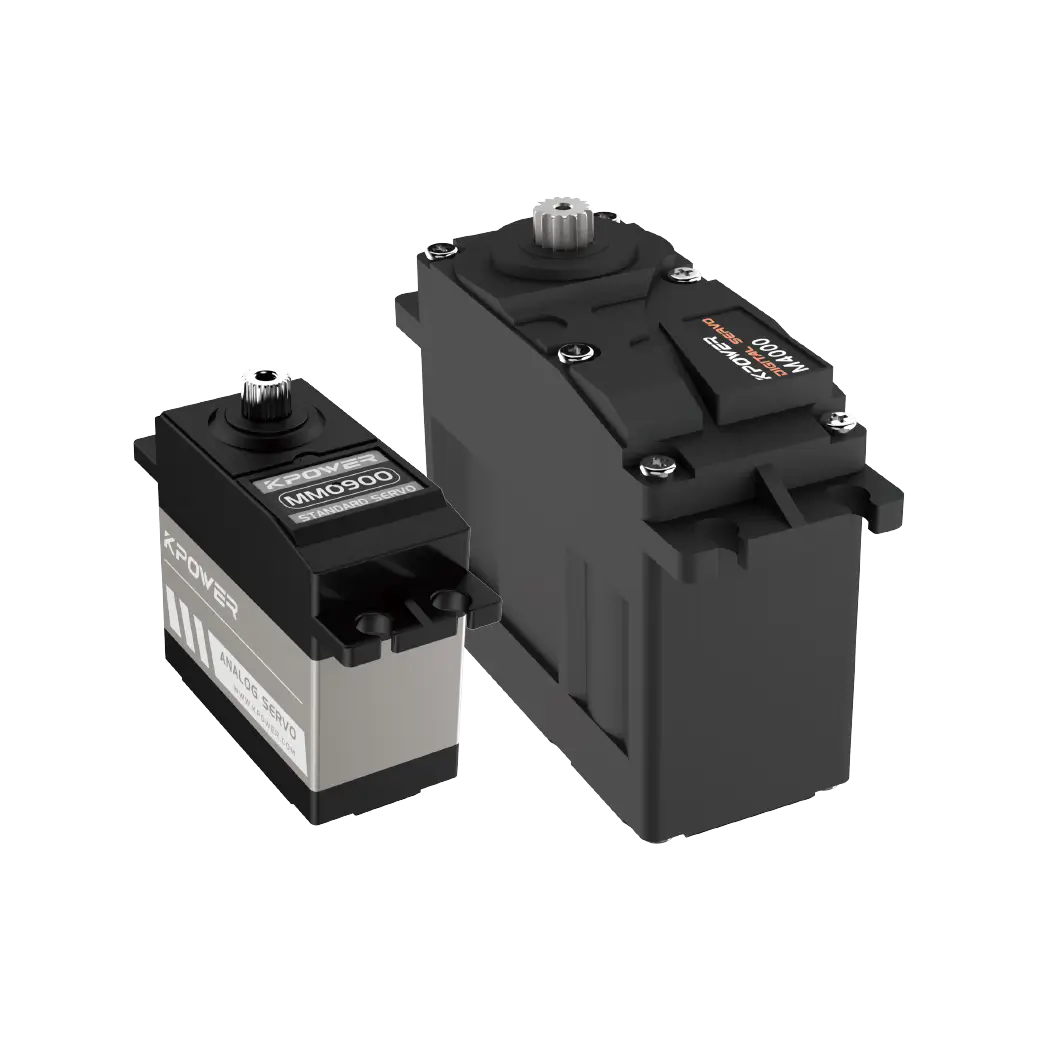
The plastic shell that speaks to you like a whisper tells you softly: It is very light and extremely friendly, and it is an excellent partner for you to explore the world of entry-level fields. With its light body performance, it saves you valuable weight of the entire machine. This is not only due to cost considerations, but also an acceptance of the simple philosophy of "enough is enough".
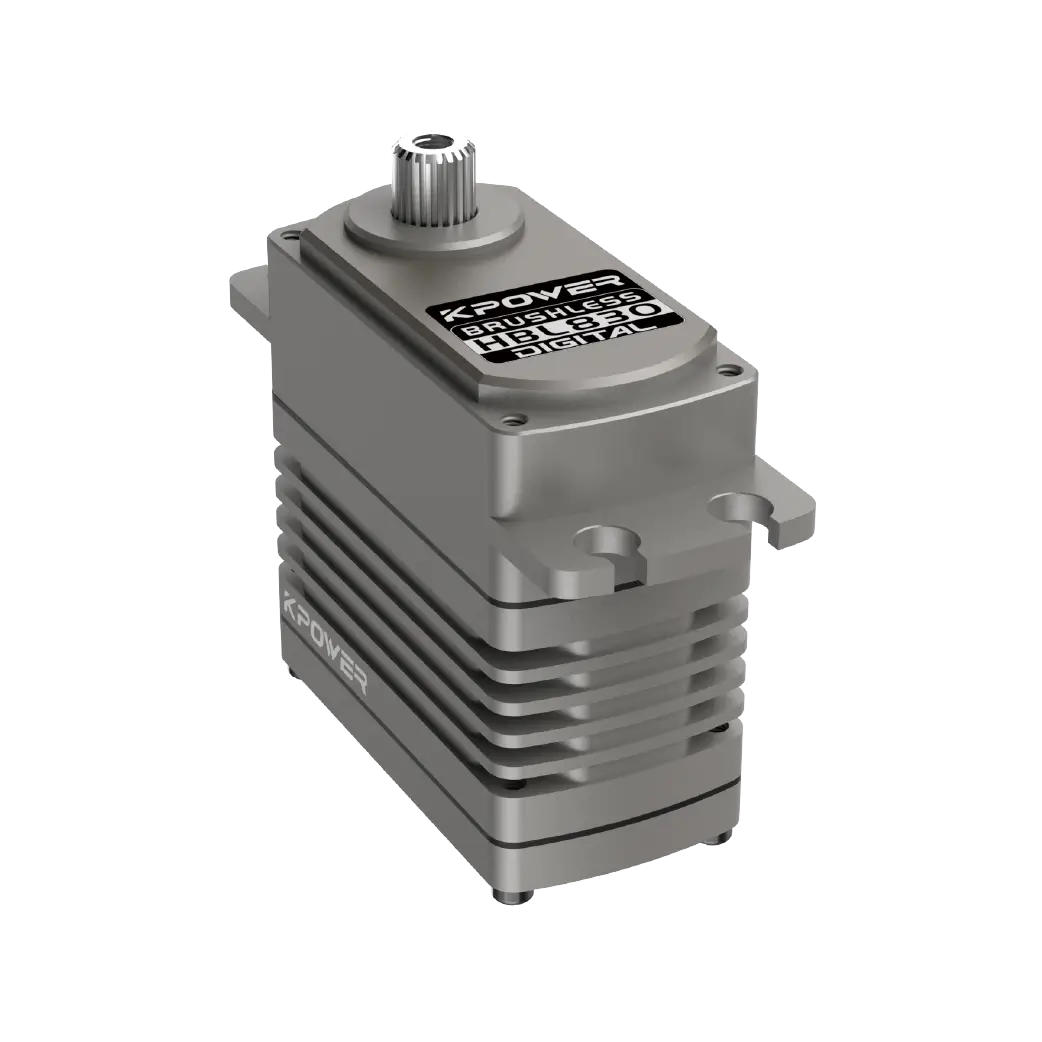
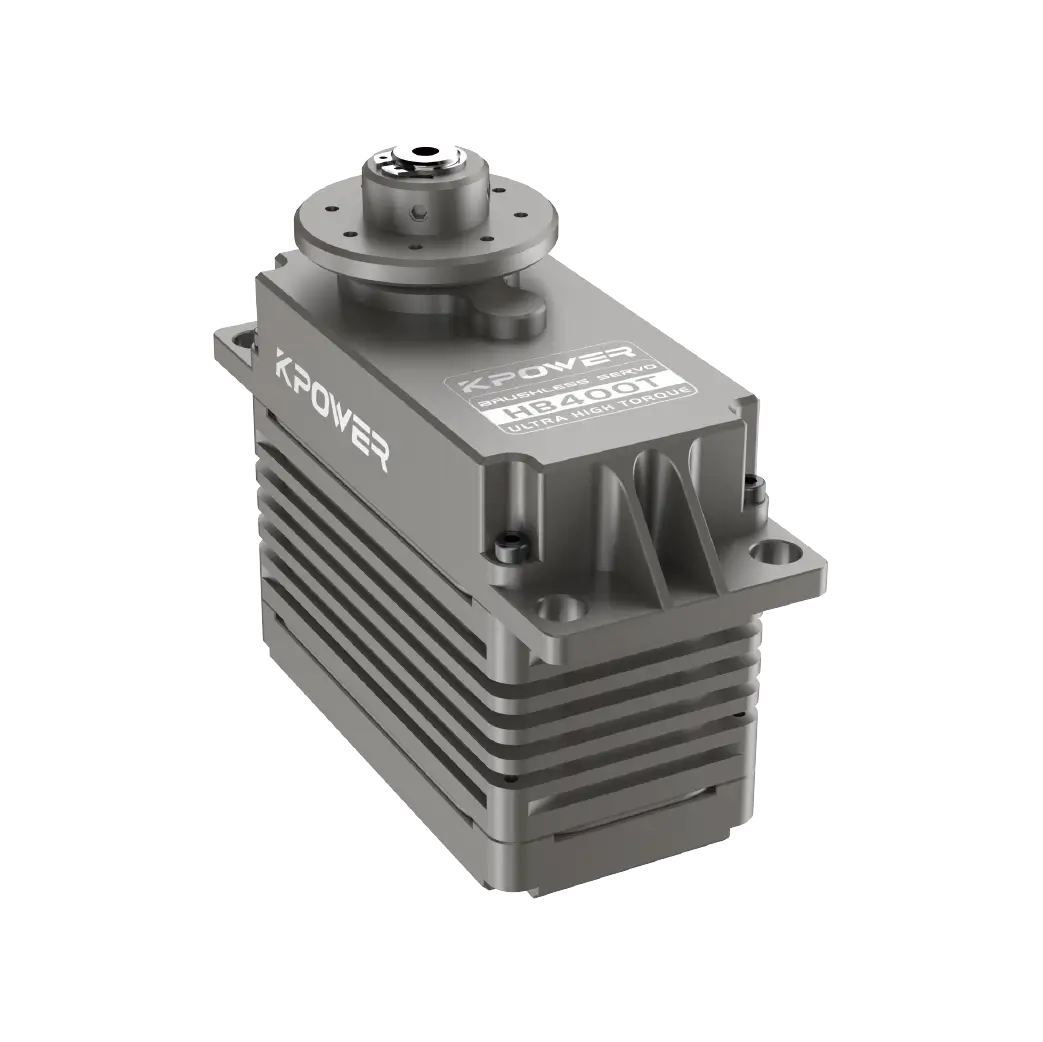
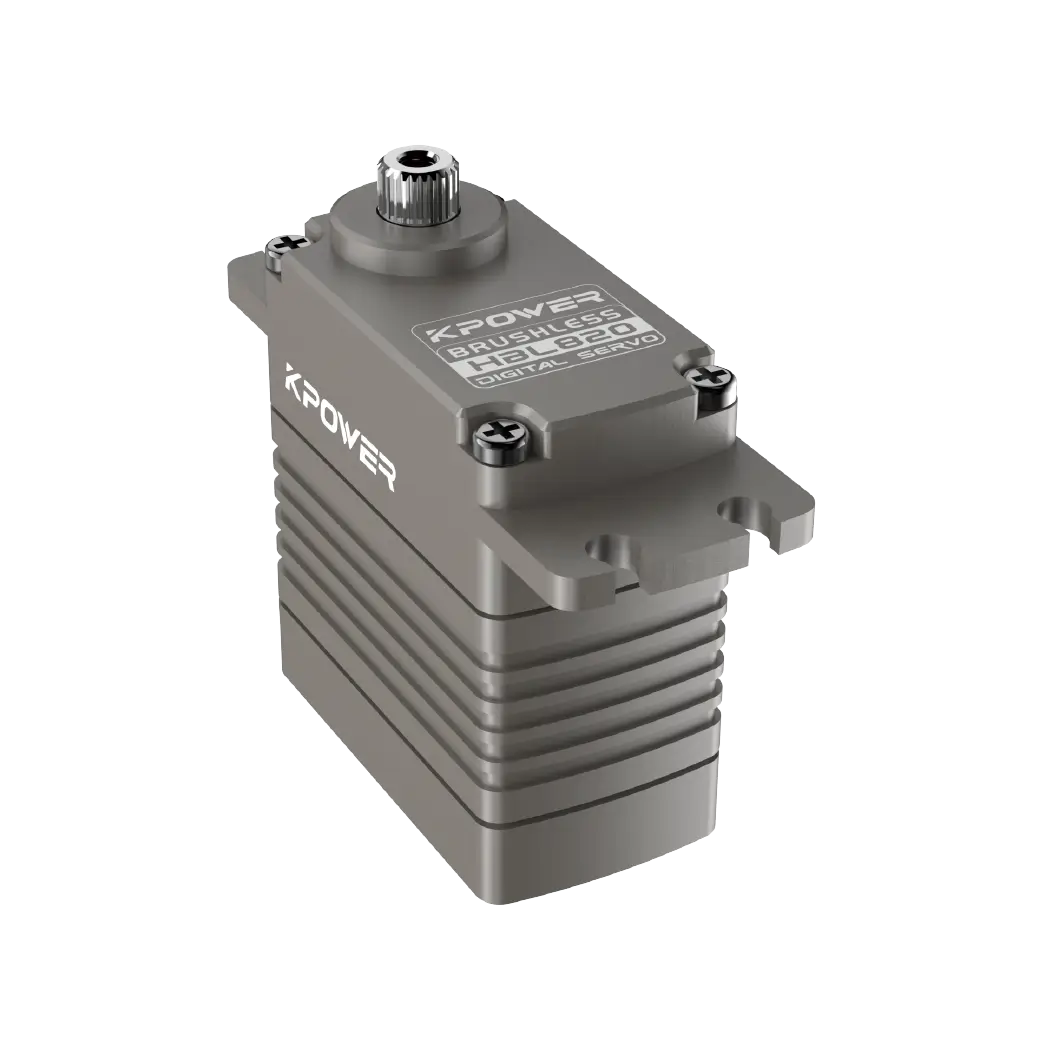
In the state of metal shell, it silently declares another possibility, that is, "I have the ability to bear more." There are changes in this material, and its purpose is not only to be strong, but also to solve a more fundamental problem, which is the problem of heat dissipation. During high load and high frequency continuous operation, heat is like an invisible killer that will quietly erode motor performance. The metal shell full of heat dissipation slots is like a fortress with efficient heat dissipation function, which can continuously conduct heat out, ensuring that the internal core is in a cool and stable state. when you seeSteering gear picturesAt that time, it was not just a picture, but a decision made resolutely by the designer in a game between heat and power.
The Profundity of the Second Sight: The Whispering of the Gears
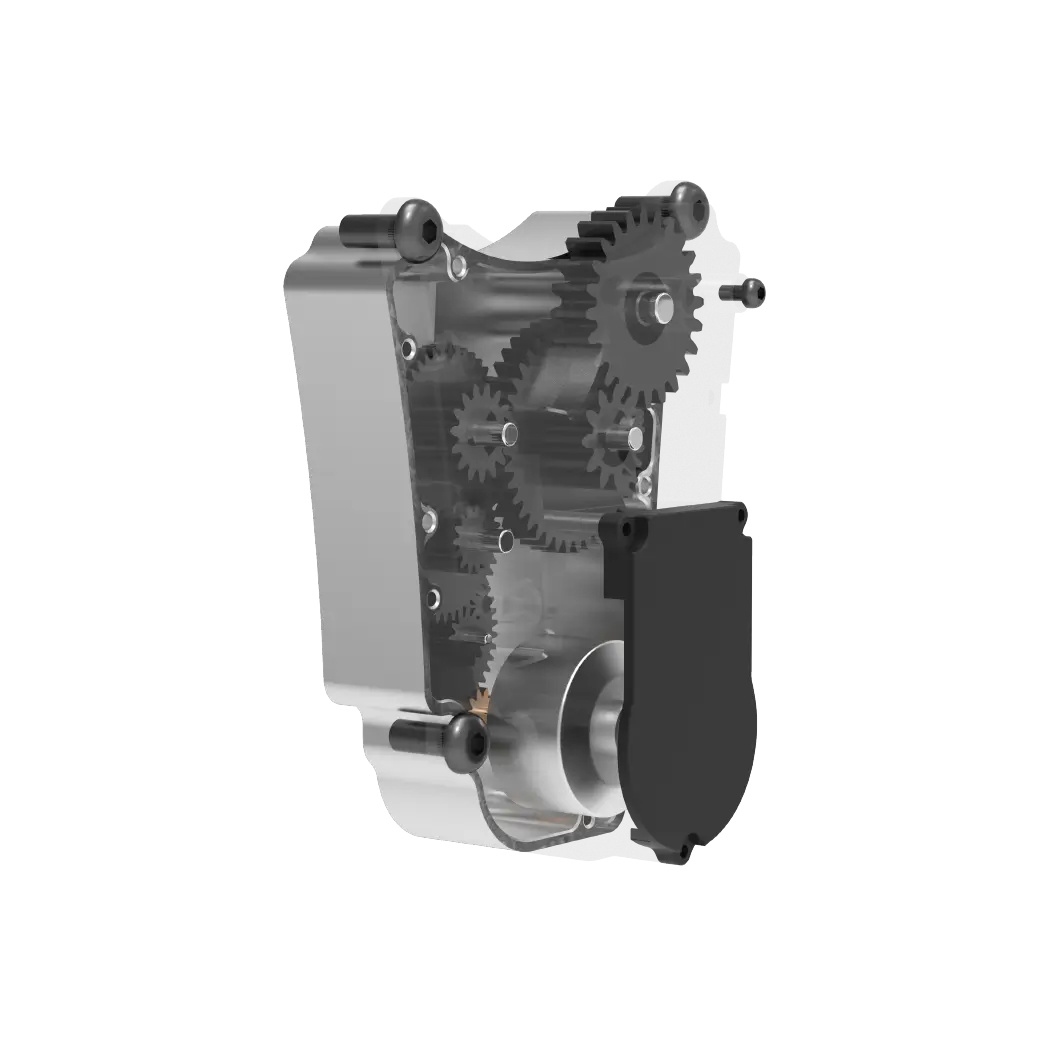
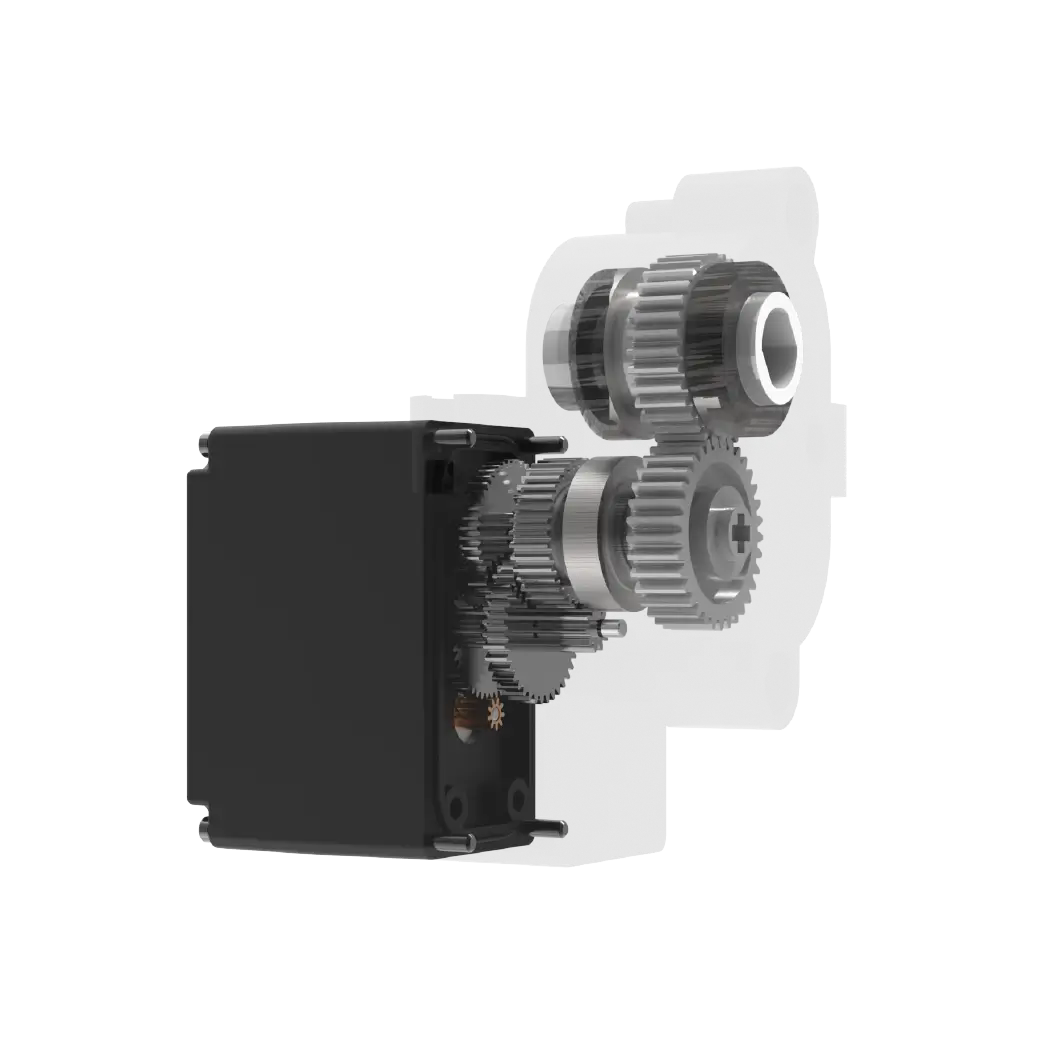
At this moment, we are allowed to move our gaze forward a little further, penetrate the shell, and focus onSteering gear picturesThe most frequently highlighted part is the tiny gear at the top of the output shaft. However, the actual mystery often lies beyond the confines of the frame, hidden within that inner gear train that we cannot see. If the shell determines the "physical characteristics" of the steering gear, then the gears are its "skeletal veins".
There is such a thing, it's called plastic gears. They are among the most silent devotees. They are low-cost and rely on their smoothness to achieve an extremely smooth and quiet feeling. Can you imagine that in a small robot used for desktop interaction, it is these plastic gears that operate silently, making every wave and every turn of the head so gentle, and will never disturb people working at their desks. They rely on the biggest advantage of "quietness" to achieve perfect mission achievements.
If weight and strength become the protagonists, metal gears will appear. They are rigid and strong, and can carry a load several times their own without hesitation. However, the price is also clearly reflected. The stronger meshing gives more direct feedback, and the clearly audible "hissing" sound in the ears is a movement of bursting power. Yes, but isn't this a "character" that needs to be weighed and accepted by you?
So, is there a kind of wisdom that can accommodate these two personalities? This is the "metal-plastic hybrid gear" you sometimes see. It's like a carefully choreographed pas de deux, using solid metal where power is transmitted and leaving plastic where it needs cushioning and smoothness. It's a subtle compromise and a perfect balance of cost and performance. A carefully photographedSteering gear picturesIt may not be possible to directly tell you the material of the gear, but its positioning accuracy and strength level all quietly hint at the secret of its internal gear set.
The Rhythm of the Third Eye: The Tango of the Electric Machine
Continuing our journey, our eyes pass through the gears and reach the core area of the steering gear. Here, there is a fast-rotating soul hidden, that is, the motor. It is the starting point of all power and the first dancer that converts electric current into rotation. You may ask why some servos are as agile as cheetahs while others are as sticky as honey. The answer is right here.
Brushed motor: Imagine a simple world composed of magnets, coils, and commutators. When current passes through it, the magnetic fields interact with each other, and rotation begins. However, the carbon brushes that have physical contact are destined to face friction and wear when transmitting the fire of life.The sound it emits has a "sizzling" grainy feel, and the cost is relatively easy to accept. It is the most common choice among entry-level servos.。
A more wonderful space is turned to the imagination. Here, the magnetic field is precisely sequenced by electronic controllers so that the rotor appears to be suspended in the air, without any physical contact around it. This is a brushless motor, and more than that, it eliminates the friction noise caused by the brushes and uses almost all the energy for work. So it results in higher efficiency, longer life, and that pure, silky-smooth high-speed spinning phenomenon. When you see servos on some sophisticated drone gimbals or high-performance models, think about it again. Behind the smooth movements, there is often this brushless "heart" beating. in oneSteering gear picturesAbove, you may not be able to hear the sound, but you can definitely anticipate the quiet and powerful power from the word "brushless" marked on it.
The Wisdom of the Fourth Eye: Strategy from the Control Board
The body of the steering gear is composed of three parts: the casing, the gear, and the motor. What gives the body soul, wisdom, and precision is the small, inconspicuous control panel. It is like a strategist sitting in the dark, receiving external instructions at all times and accurately commanding the motor how many degrees to rotate, when to stop, and when to exert force.
Here is the fork in the road where digital servos and analog servos part ways.
The analog steering gear has continuity and smoothness in its decision-making, but its response speed is relatively slow. When it is in a stationary state, it will make a slight buzzing sound because it keeps trying to lock the position, consuming a certain amount of energy, just like the ancient waterwheel, which works stably and uninterruptedly.
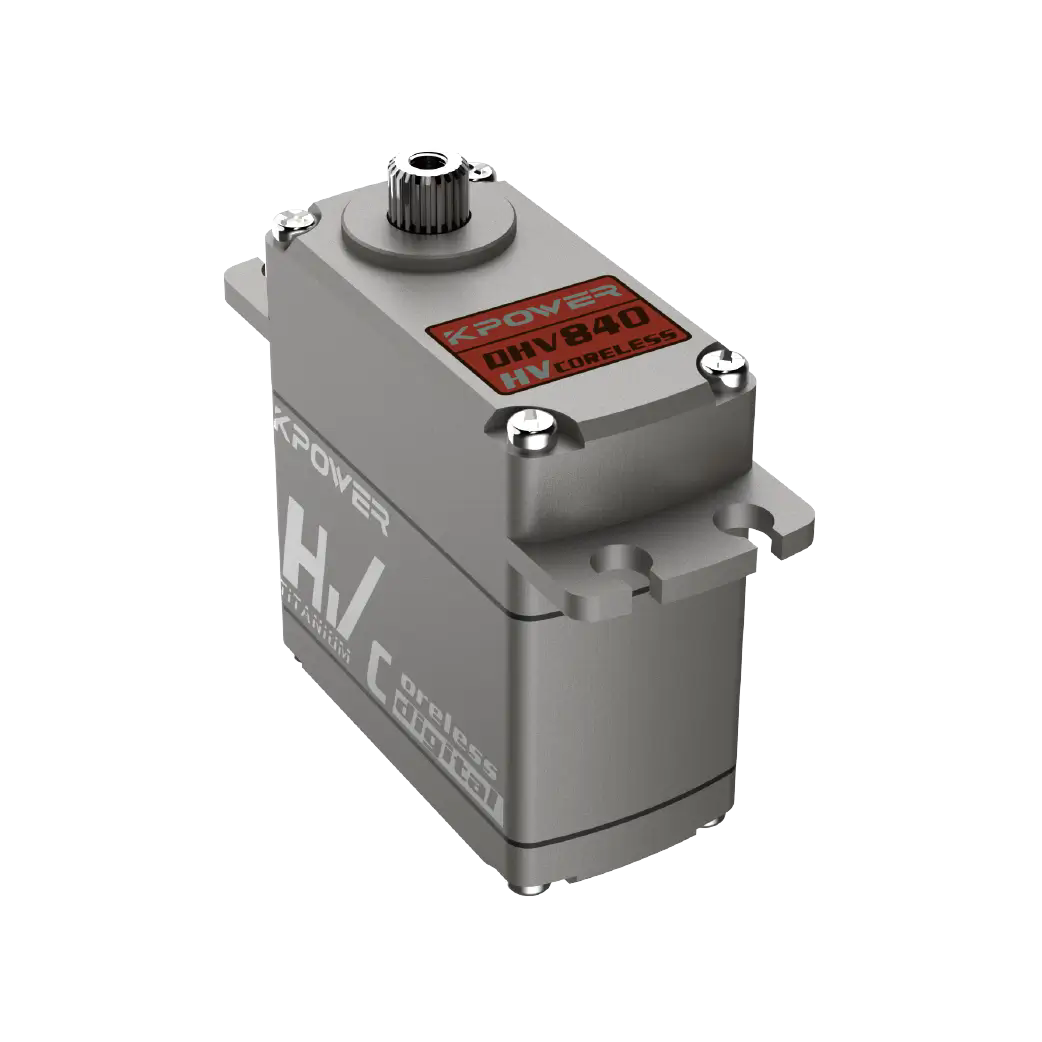
The digital servo adopts a completely different strategy. It processes signals at extremely high frequencies, just like using a machine gun to fire bursts. It can react to position deviations at lightning speed, which results in faster response, the torque reaches its peak at the moment of startup, and the "dead zone", which is the area insensitive to small instructions, is smaller. However, this high-frequency working method also means higher power consumption and faster heat dissipation requirements.The picture of the servo in your hand may be showing its quick response, and the root of this speed is the precise strategy of this square place.。
2. read aSteering gear picturesfive passwords
After you start to learn to look at the steering wheel from the outside in, a new challenge emerges. There are thousands of them on the InternetSteering gear pictures, it seemed like a huge maze. Every picture is trying to convey a message to you, but what is the key point? What you lack is a key, a set of codes that can quickly decipher the secrets.This set of passwords is not complicated. It is mainly composed of five core parameters. They are like the "ID card" of the steering gear, faithfully recording the boundaries of its capabilities.。
Password 1: Dimension - the poem of space
In the field of steering gear, size cannot be defined casually.. It acts according to the kind of discipline that is almost harsh and severe. The most common ones are standard servos, micro servos, small servos and the like. This is not a simple specification, but a poem about space, power and possibility.
Imagine this scenario. Now you are designing a small bionic robot that can be placed in the palm of your hand. It has a delicate and delicate body shape, and each joint of the body must have power to operate. At this moment, a picture of a standard servo appears in front of you. Even though it has a very considerable torque, you can only slowly shake your head and refuse to use it. Its overall size and specifications determine that it is suitable for a wider range of application scenarios, such as providing power for a one-tenth scale remote control off-road vehicle to pull the heavy steering control lever; or it can be used in the thigh joints of a large mechanical dog to withstand several times the impact force during the running process of the mechanical dog. But what your palm robot needs is a micro-server, which is as small as a knuckle, but enough to make a light butterfly flap its wings, or to make a mini mechanical spider take flexible steps. Therefore, when you areSteering gear picturesWhen you are attracted, you need to first, and must, focus on the word "size". It is the first hurdle to determine whether all your ideas can be realized, and it is a hard constraint on space. Common sizes include standard servos (approximately 40.8×20.1×38mm), which determine the entrance of power; micro servos (approximately 23×12.2×29mm), which are as light as a butterfly and determine fine directions.
Password 2: Torque - Sigh of Power
The parameter that can push the weight of an object is torque, whose unit is generally kg·cm or oz·in. This parameter is intuitive and exciting. It can tell you the weight of the object it can push at a distance of 1 cm from the center point of the servo output shaft.
But be careful, there is a gentle trap here. The torque value given by the manufacturer is usually the maximum value measured under a specific voltage condition, which is named "locked-rotor torque". So what is stalling? This shows that the steering gear has exerted all its strength, and the motor is extremely stuck and cannot rotate at all. This is an extreme situation and an extremely dangerous state.
In your actual project, like this, you would have a robotic arm lift a glass of water. This glass of water plus the structural weight of the robotic arm itself creates a moment of 15kg·cm at the joints. So, is it okay to choose a servo with a nominal torque of just 15kg·cm?
The answer is, not nearly enough.
Imagine that you are trying your best to just stand still, and then any slight breeze or slight movement will cause you to fall. The same is true for the steering gear. The impact force from the instant start, the inertia generated during movement, and the slight deformation resistance in the structure will all cause the actual load to increase sharply in an instant. As a result, if a steering gear is operated under a load that is close to the limit for a long time, the motor and gear speed contained in it will accelerate wear and tear, and the temperature will rise rapidly. In the end, it is very likely to cause gear teeth sweeping, motor burnout, etc. In order to obtain that calm and elegant posture as well as a reliable and stable life span, a common rule of thumb is: please leave at least 20% - 30% torque redundancy for your servo. Lift the cup of water weighing 15kg·cm and choose a servo with a nominal torque of about 20kg·cm. This power regarded as "excess" is not wasted, but becomes a deep sigh related to safety and lifespan.
Password three: speed - the rhythm of time
Speed, this parameter is generally expressed in "seconds/60 degrees", which represents the time it takes for a small steering wheel to complete a 60-degree rotation.. 0.2 seconds/60 degrees and 0.1 seconds/60 degrees. Can people feel the difference of 0.1 seconds?
In the remote control car racing field, this tenth of a second is the difference between victory and defeat. When you give the command to turn the car, the steering gear responds immediately, and the front of the car seems to be controlled by the arm, quickly cutting into the apex of the bend, leaving the opponent far behind. Here, speed is life and burning passion.
On that gimbal specially used for shooting time-lapse photography, the meaning of speed was completely rewritten. What you need is not speed, but slowness. The ultimate slowness, slow enough to separate the breath of every flowing cloud, slow enough to describe the posture of a flower in bloom. At this time, the speed may be as high as 0.5 seconds/60 degrees, or even slower. It is no longer the pulse of life, but the gaze of time.
How fast is the steering gear you need? The answer to this question does not lie in the parameters themselves. The key lies in the work in your heart that should fit it. One is the majestic battle rhythm like the wind and rain, and the other is the soothing and peaceful poem of time like tranquility. When you are browsingSteering gear picturesAt this time, the numbers displayed next to the red lightning mark are quietly defining the sense of time of your project.
Password 4: Voltage - the dance floor of energy
Voltage is the stage required for the servo to perform. Just oneSteering gear pictures, no matter how exquisite and beautiful it is, if it is not assisted by the voltage parameters mentioned in the manual, then this picture willSteering gear picturesIt is also in an incomplete state. Commonly seen servo voltages include 4.8V, 6.0V, and 7.4V, and there are even cases where they exceed these values to reach higher values.It is such a number. Not only can it determine how much potential the servo itself can unleash, but this number also more directly determines which type of power supply you should choose for it.。
Pay attention to observation. The torque and speed of almost all servos will increase as the voltage increases. In the case of 4.8V, it may be a gentle scholar, but its torque is ordinary. Driven by the high voltage of 7.4V, it may instantly transform into a warrior who dares to challenge the three armies. The torque and speed have received an explosive increase in voltage. The exciting thing about it is its amplitude-increasing device.
However, the ladder leading to the stage of development towards higher performance is based on energy as a ticket.你的电池能够供应7.4V的稳定电压吗,另外,你的电源管理系统,能够承受高功率输出之际所产生的发热现象吗? This situation is like a dancer who can perform more gorgeous dance steps on a larger dance floor, but the physical exertion will also increase exponentially. when you becauseSteering gear picturesWhen you are excited by the above high-voltage performance parameters, please ask yourself one more time: Am I ready for that bigger dance floor?
Password 5: Signals - the language of conversation
The last password is about communication. It is also the most abstract, and it is about the silent dialogue between you and the steering gear. Most servos speak the same ancient language, which is PWM, which is a pulse width modulation signal. Its principle is not mysterious. Within a fixed period, usually 20 milliseconds, the duration of a high-level pulse determines the target angle of the servo. A pulse of 1.5 milliseconds represents the neutral point, 1 millisecond represents 0 degrees, and 2 milliseconds represents the maximum angle.
However, this language is one-way and dull. You give an order, but you have no way of knowing whether it will be executed, nor how strenuous it is at the moment. So, you searchSteering gear picturesOn this occasion, you may find some servos marked with "TTL" or "RS485", which are serial bus servos.
They speak a higher-level language. You no longer shout commands on one line, but hang all the servos on the same bus. Through packaged data packets, precise addressing and two-way communication are carried out. You can ask it what angle you are at at the moment. It can also answer you truthfully about how much current you consume when turning and what your internal temperature is. This language makes advanced functions such as closed-loop feedback and torque control possible. This is no longer a simple command execution relationship, but a two-way, intelligent communication. when youSteering gear picturesWhen you see those extra signal lines above, you need to understand that where they are connected is a broader possibility, which is the door to the advanced intelligence of the robot.
3. Meditation selection for six common scenarios
Stationary stars are theories and parameters. Only when placed in real and fluid application scenarios will they converge into constellations that guide the direction. At this moment, let us carry out a meditation on type selection together, projecting the figure in the servo album into the six specific situations you are most likely to encounter in the project. Here, theory is ignited by practice and parameters are awakened by demand.
Scene 1: The "power aesthetics" of RC model car steering
You are assembling a one-tenth ratio electric off-road remote control vehicle. What you need is a steering gear that can turn the steering wheel vigorously and still give you accurate direction on uneven roads.
First of all, your eyes will first fall on the size - this size must be the size of a standard servo, and the purpose is to be able to smoothly fit into the servo base that has been reserved in advance.. The next thing to focus on is torque. Since off-road vehicles perform steering operations when driving on bumpy roads, the huge resistance will be fed back in the corresponding direction through the connecting rod. Therefore, what you need is a steering gear with strong torque. For example, when operating in a 6.0V voltage environment, it must be able to reach a level of 15kg·cm and above, and it is best to reserve sufficient redundant space. The final consideration is speed. You must have responsive characteristics. A speed of about 0.15 seconds/60 degrees will bring about a fairly hand-controlled control experience. The gear part must undoubtedly be made of metal. Only with such a material can it survive the harsh environment full of dust and impact. When you close the imaginary album, you already have a clear picture in your mind. It is a picture showing a metal shell with high torque and fast response parameters marked on it. It is a picture of a standard servo, which is quietly waiting for your review.
Scene 2: "Dance of Precision" on a fixed-wing model aircraft
The wind is both the enemy and the partner of model aircraft. You choose an aileron servo for a balsa wood fixed-wing aircraft. Its task is to accurately implement every detail of your instructions in the whirring airflow.
Here, micro or small-sized servos become the protagonist, aiming to reduce weight. The requirements for torque are not high, 2 to 3kg·cm is fully capable of handling the rudder surface of a small aircraft. But precision, precision is the key. You must have extremely high accuracy in its positioning, extremely good centering performance, and as small a dead zone as possible. Plastic gears are a better choice here than cheap metal gears due to their smoothness and zero backlash. As for speed, it is just the right amount of smoothness, which is more important than lightning-fast reactions. one pieceSteering gear picturesAt this moment, it transformed into a precise instrument. Its beauty does not lie in its rough power, but in its precision that can separate the airflow and be so quiet that there is no sound.
Scenario 3: The “Soul of Collaboration” of Robot Joints
When the scene changes to an educational robot arm with multiple degrees of freedom, what you need is not a separate servo, but an orchestra member that can coordinate with other joints.
The size must be customized according to the load of each joint. The shoulders and elbows may use standard servos, or even higher-torque versions. Micro servos are used on the wrist and claws. At this moment, voltage uniformity becomes extremely critical. Giving all servos a common and stable 6.0V or 7.4V power supply can greatly simplify wiring. The most critical thing is the variation of the signal.Do you need to know whether your arm has touched an object? Do you need it to maintain a constant torque to grab a fragile egg? If so, the serial bus servo is the best choice.. Its feedback function adds perception to the robot, causing simple "actions" to evolve into intelligent "interactions." Here, your pickSteering gear pictures, not just an individual, but a node owned by a network, a soul with touch.
Scene 4: The "breathing rotation" of the photography gimbal

As a landscape photographer, you have a passionate desire to capture the breath of the earth and the movement of stars with the help of a self-made time-lapse gimbal.
In this scene, the speed parameter seems to have disappeared. What you need is an extremely slow, extremely smooth rotation, so slow that every pixel moves as steadily as a rock. It doesn’t need to be very powerful, as long as it can push the camera and lens used for shooting smoothly. However, three entirely new parameters emerge: resonance, noise, and backlash.
When running at extremely low speeds, the gear gap inside a poor-quality servo, also known as backlash, will be infinitely magnified, causing slight, unforgivable jitter in the screen. When the motor is operating, it will produce resonance and high-frequency noise, which may be transmitted through the camera body, thus destroying the purity of long-exposure images. In this case, you have to look for servos that emphasize quiet drive and low backlash. Their gears may be made of special plastic or metal that has been precision ground. At this moment, an idealSteering gear picturesIt is silent. With its dense shape and fine craftsmanship details, it promises you a time-related visual meditation without interruption.
Scene 5: The “Heartbeat” of the Bionic Spider
You are deeply obsessed with that multi-legged robot with a wonderful gait. It is a bionic spider with eight legs. It requires at least twelve and more servos to enable each leg to swing flexibly.
At present, we are facing the highest level test of the consistency of the steering gear. There is a system composed of twelve servos. If each of the servos is slightly different in terms of operating speed, torque, and angle range, the result in the end will be a huge disaster - take the spider as an example, it will limp when walking, and there is a complete lack of coordination. Therefore, you must not mix and use servos from different batches and models. You have to purchase them uniformly to make sure they all come from the same nebula and have the same genetic characteristics. In addition, several hours of continuous gait testing are a rigorous test of the lifespan and durability of all servos. Reliability plays an overriding role at this time. At this time, what you see in your eyesSteering gear pictures, what is depicted is not a single individual, but a queue formed through replication. The value they possess is the harmony and unity between each other.
Scenario 6: The first servo for entry-level learning
This situation is probably the starting point for most people. You are inspired by the passion for creation and simply want to explore how the code makes something run. You do not have specific and extremely strict project restrictions.
So, an extremely common and extremely safe case suggestion is: start with a micro 9g servo. It is low in price, and you will not feel distressed even if it is damaged; it is simple to drive, with only one signal wire, one power wire and one ground wire. Connect it to Arduino or any microcontroller, and you can use the entry code "Servo.h" library to make it rotate back and forth between 0 and 180 degrees. You don't need to worry about complicated torque calculations or bother with powering a high-voltage power supply. A picture of a micro 9g servo is your key to opening this door. There is nothing outstanding about it, but it is full of enthusiastic expectations. It belongs to and even builds the first starting point of all your magnificent ambitions, and it is also the most gentle and gentle source.Don’t forget that something as simple and ordinary as making the first servo start running is a hundred times more important than comparing the high-end parameters in a servo image over and over again.. You should take action first, and then think about how you can act better and better.
4. Seven Action Guidelines for the Future
Meditation has ended on a theoretical level, and the lines of the map are clearly discernible. Now is the time for you to turn the wisdom we gain from contemplation into clear steps toward the future. You are no longer someone staring silently from a distanceSteering gear picturesAs an outsider, you have truly become a creator with a checklist and an unwavering gaze. Please accept these seven action guides. They will further strengthen your intuition when choosing a model, and anchor the poetry and excitement you had when you first met it firmly and firmly in feasible daily practices.
Guide 1: Decide on the scene first, then look at the picture list
Don’t face the vastness alone without context.Steering gear picturesocean. Please pick up the pen and define your project clearly and clearly as if writing a micro-novel:
Who is the protagonist? Is it a racing car that puts speed first, or a climbing car that focuses on strength?
What kind of core actions does it need to complete? Was that action an instant and precise turn? Or is it a continuous and smooth lift?
If it were to be replaced, what kind of environment would it work in? A dusty construction site, or a quiet, quiet and clean desktop.
Once you have the answers to these questions, parameters such as size, torque, speed, and protection level will no longer become isolated numbers, but will become a powerful filter for you to select servos.. one pieceSteering gear picturesAs a result, it becomes three-dimensional. It is no longer a static object, but a certain slice of future action scenes. A clear and clear scene, that is the way to the rightSteering gear picturesthe only front entrance.
Guide 2: Give Torque Room to Breathe Checklist
We have chanted this point repeatedly, but it deserves to be reiterated in the loudest voice: Don’t let the steering wheel you choose become Sisyphus in Greek mythology, who pushes the stone up the mountain every day.To make it work within the range of 70% - 80% of its nominal torque, the extra 20% to 30% of the power is not a luxurious waste, but a wise investment.. What it gains in exchange is that the gear life is extended, the response speed remains stable, the control accuracy is guaranteed, and the entire system has the confidence to be calm and unhurried when facing sudden shocks. This redundant and repetitive content is given to you in the future after you analyze it rationally. It is called a gift and is the most stable thing that can bring peace of mind.
Guide 3: Make the power supply a strong backing list
A picture of a servo may be able to give you all the visual information, but it can never tell you what it looks like when it is hungry.. There is a servo that is rated to reach a torque of 20kg·cm at 7.4V. If it is only supplied with a small flow of 5V and insufficient current, its performance may not even be as good as an ordinary servo. It may even cause the control board to continue to reset due to insufficient power supply, and the movements will become weird and twitching.
Please be sure to pay attention to the "instant peak current" of the servo. When starting or encountering a stall, the current required may be several times that of normal work. A common experience is to prepare a separate battery for your servo system with a sufficiently high discharge rate, and make your power line strong enough to reduce line losses. Remember, the power supply capacity directly limits the upper limit of the performance of the servo in your hand. A powerful servo , requires an equally strong energy support.
Guide 4: Master the two-way communication language list
This is the dividing line between a regular assembler and a true creator. Knowing how to understand PWM signals, as a basis, can enable you to drive most "dumb" devices. But please go one step further and explore the world of serial bus servos. Learn how to send commands to the servos through data packets, and analyze the temperature, load, position and other information they feed back.
Mastering this skill is like opening up God's perspective for you. You will be able to:
Monitor the health status of robot joints in real time.
Achieve compliant control, making the robot arm as soft as a human arm instead of stiff.
Build a fault warning system to reduce the load on the servo before it overheats.
Taking the leap from simply sending commands to actively listening to feedback will completely widen the distance between you and others in terms of robot technology cognition, and it will advance you from an "operator" to an "interlocutor".
Guide 5: Build your personal steering gear illustrated list
Every successful application you make, and even every discouraging failure, is priceless. Please start building your own servo illustration and create a detailed personal file for every servo that passes through your hands:
Photos of the actual product and what you saw when purchasingSteering gear picturescontrast.
Test date, operating voltage, measured no-load speed and actual torque under different moment arms.
Take a disassembly diagram (if you are willing) and record the material and wear of the gears.
Subjective assessment of noise levels, and any unusual vibrations at work.
Is its final destination a resolute and heroic sacrifice in a fiercely competitive game, or is it still serving solidly and stably on a certain piece of equipment for a long time to this day?
This illustration will become the most realistic and credible reference for you to make future selections.When the exquisite servo images published by the supplier can only give you fantasy, the illustration in your hand will give you the reality.. It can tell you which parameters are real and which are just nonsense after marketing fabrication.
Guide 6: Listening to Gear’s Sigh List
Before embarking on a new project, develop a habit of connecting the servo you initially selected to a simple test circuit on a quiet table, and drive it to run back and forth from 0 degrees to the maximum angle without load. Then, close your eyes and listen attentively.
Are you hearing the high-frequency, smooth "buzzing" sound of plastic gears? Or is it that the metal gears are full of power, but also have a rough "hissing" sound? When you turn the steering wheel back and forth, if you notice any unsmooth "crunching" feeling, it means the gear is not processed well or there are debris. When it is stationary and a certain load is applied, if there is any abnormal high-frequency whistling sound, it may be a sign of poor PID parameters on the control board.
A picture of a steering gear can never tell you this. This sound and feel are the steering gear telling you its health and temperament in the most straightforward way. When you learn this listening skill, you will have another kind of screening wisdom.
Guide 7: Start with a picture, go beyond a list of pictures
Finally, the most critical action guidance. All our journeys start from those steering wheel images. Images give us the first impression, they give us a sense of size, they give us the orientation of the interface. But please remember, don’t rely solely on oneSteering gear picturesMake the final decision.
Think of the picture as a catalog to guide you to the more critical "parameter specification sheet".
Go to the specification book and look for diagrams that don't exist in the pictures, including curves of voltage and torque characteristics, curves of power consumption, and CAD drawings with accurate dimensions.
Read real reviews in communities and forums, and see what people who have already used it say about this servo during their long-term practice.
The starting point is aSteering gear pictures, it ignites your curiosity. The parameter list, reviews, and your personal experiments are the most solid reasons for you to buy it with confidence. It starts with pictures but always goes beyond pictures. Let the light of reason illuminate the final step of your selection.
Q: Just watchSteering gear pictures, can you tell whether the quality is good or bad?
A: Basically it’s not possible. Pictures can show the details of materials and workmanship, but they cannot reflect the core qualities of gear accuracy, control algorithms, lifespan and consistency. Therefore, it is necessary to refer to parameters and conduct actual measurements.
Q: Are metal gear servos better than plastic gear servos?
A: Not so. Gears made of metal have greater torque and longer service life. However, they make more noise and have more empty spaces.Plastic gears run smoothly, sound quietly, and there is no false position phenomenon. In scenarios where precision and silence are required, they are a better choice.。
Q: MineSteering gear picturesIt says "waterproof", can it be soaked in water?
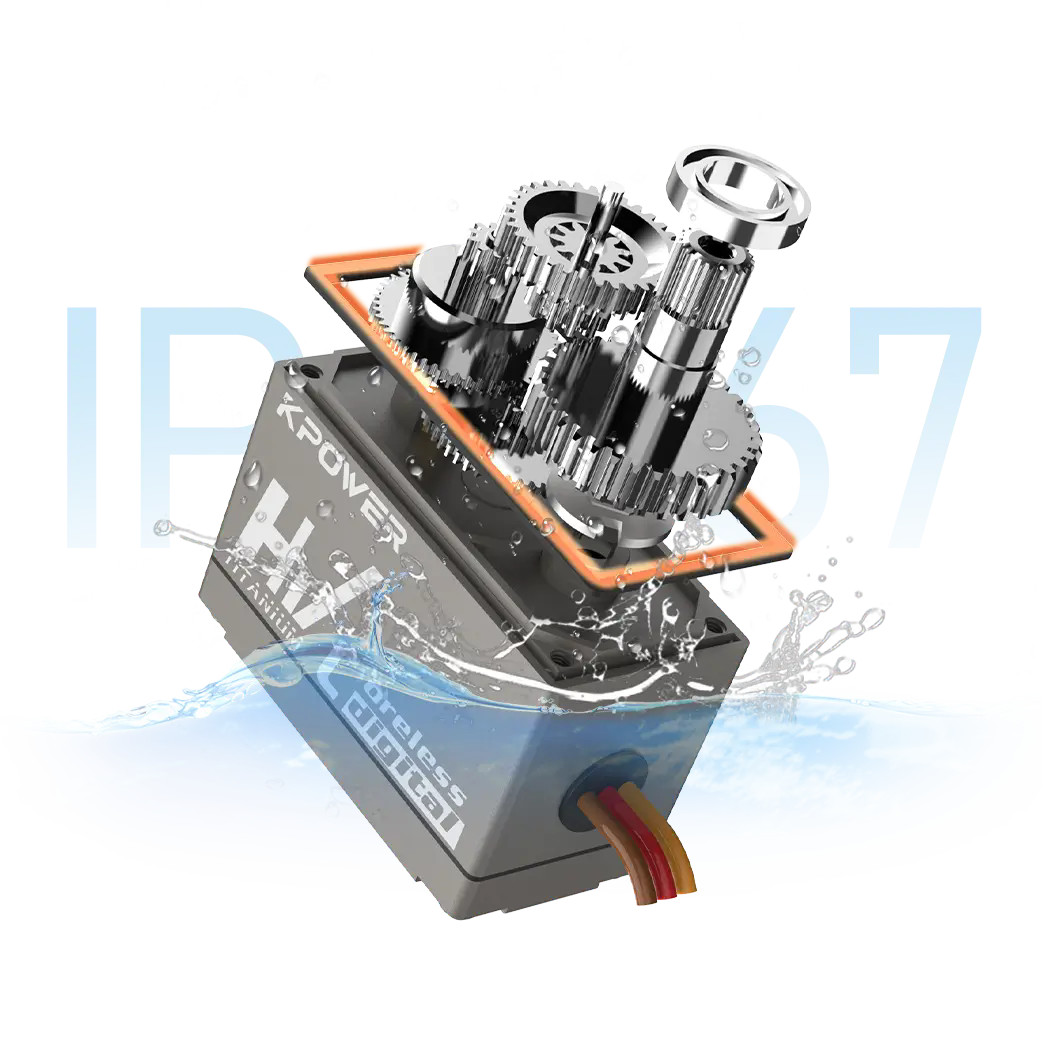
Be careful to confirm that most of the so-called "waterproof" only refers to protection against splashing water, rather than being able to be immersed in water. Only professional servos that are clearly marked with an IP67 or IP68 rating can work underwater for a short or longer period of time.
Q: Why does the servo move randomly when I connect the wires according to the picture?
On aspect A, there is a high probability that the power supply is insufficient. When the servo is started, the current is very large, so it is necessary to provide it with an independent power supply with sufficient current, instead of relying on the fragile power supply method of the USB port of the microcontroller?
Q: How to quickly distinguish digital servos and analog servos from a picture?
From the aspect of A, it is generally impossible to see it directly. However, if there is a word like "Digital" on the picture, or there is a high-frequency response parameter mark, then it is a digital servo. The decisive difference between the two is the internal control circuit.
Update Time:2026-05-12

Contact Kpower's product specialist to recommend suitable motor or gearbox for your product.


