

TECHNICAL SUPPORT


Published 2026-05-08
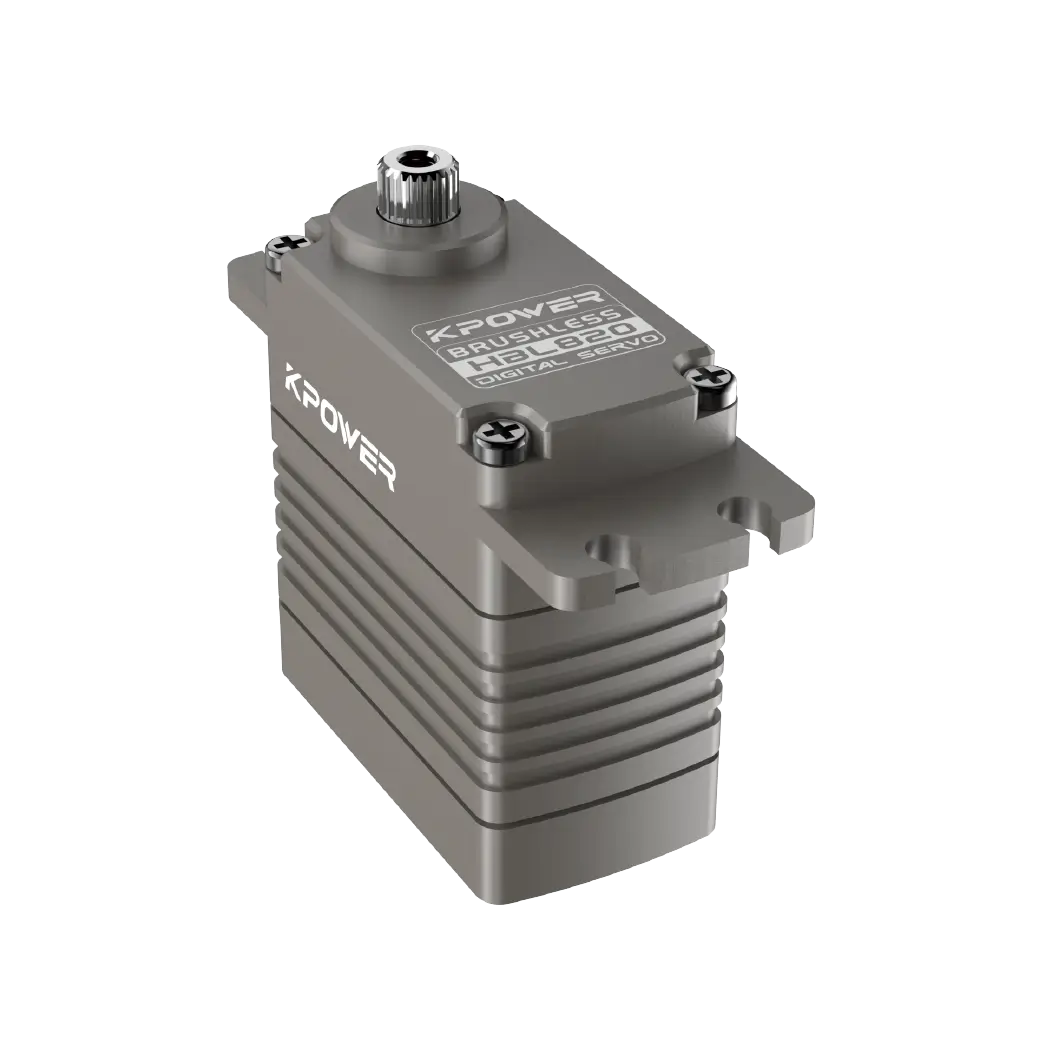
Many engineers who have just entered the industry often confuse servos and servo motors. So what are the differences between servos and servo motors? To put it simply, the steering gear is an integrated unit equipped with a limiter and deceleration function, while the servo motor is a more flexible and high-precision system. They often appear in the fields of robots, model aircraft, automation equipment, etc. Next, we will compare from 5 dimensions to help you make the right choice quickly.
Servos were first used on remote control models.
Small size
Comes with control circuit
Usually the rotation angle does not exceed 180 degrees
Servo motors come from industrial automation.
Requires a driver
Support continuous rotation
Wide torque and speed range
Suppose you want to make a small machine to grab a cup. When choosing a servo as a shoulder joint, the cost is relatively low, but it is prone to shaking.If you use a servo motor to perform the same action, although the operation will be smoother, the budget will increase to twice as much。
Keywords: position feedback
The servo controls the angle with a single PWM signal.
The high level time of 1.5ms corresponds to the middle position.
Whatever pulse width you give, it will turn to the corresponding angle.
Servo motors generally use two signals: pulse + direction.
The number of pulses determines the moving distance, and the direction signal determines the steering.
Advanced servo systems exist that support bus communication, such as CANopen and EtherCAT.
Q: Can the servo be connected to the pulse output of PLC?
It doesn't work. What the servo needs is a PWM signal with a 20ms period, and the ordinary pulse output of the PLC cannot be driven directly.。
For internal use of steering gearPotentiometerDetect angle.
The potentiometer is an analog device and will suffer wear and temperature drift after long-term use.
Therefore, the repeatability of the servo is generally above 0.5 degrees.
The position detection device used by the servo motor is an optical encoder or a magnetic encoder. The optical encoder uses optical principles to accurately measure the rotation position and speed of the motor shaft through photoelectric conversion, and can provide high-precision feedback signals. The magnetic encoder is based on the magnetoelectric effect and relies on magnetic field changes to sense the rotation of the motor. It can also achieve more accurate position and speed detection. These two encoders play an important role in the servo motor system to ensure precise control and stable performance of the motor operation.
The resolution can reach more than 20,000 pulses per revolution.
With the closed-loop algorithm, the positioning error is less than 0.01 degrees.
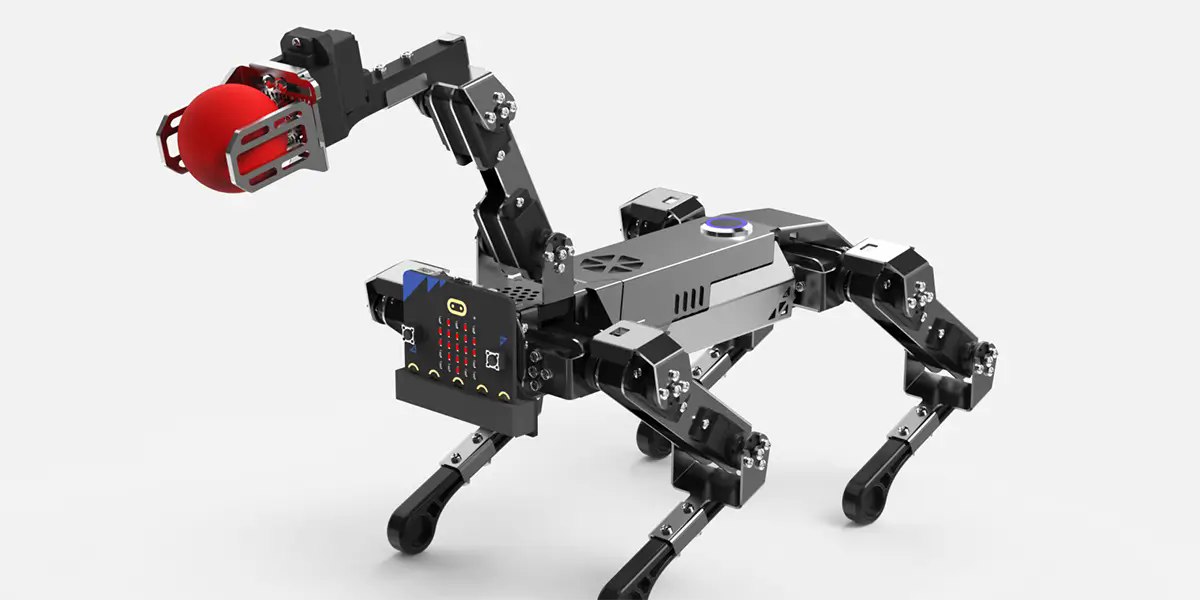
You set out to make a 3D printer. During the process, you try to use the servo to drive the extrusion head to perform printing work. At this time, you will find that the surface of the printed model shows texture. However, when you replace the servo with a servo motor, something wonderful happens. The texture on the surface of the model disappears. This particularly significant change is the essential change brought about by the encoder.
Keywords: closed loop control
The torque unit of the steering gear is kg·cm.
For example, a 15kg·cm steering gear can lift 15kg on a 1cm moment arm.
The actual speed is usually 0.1-0.2 seconds/60 degrees.
The torque unit of the servo motor is N·m.
1N·m is approximately equal to 10kg·cm.
There is such a servo motor with a power of 100W, a torque of 0.3N·m, and a rotation speed of 3000rpm.
After adding a reducer, the torque is amplified dozens of times.
Q: Can the servo rotate continuously to make a wheel?
A: Ordinary servos will not work. You need to use modifications or purchase 360-degree servos. However, there will be situations where position control is lost.
Commonly seen examples: conveyor belts on assembly lines in factories. It is obviously not possible to use a servo, because it needs to rotate continuously and withstand the load for a long time. However, if you choose the combination of servo motor and frequency converter, you can easily cope with it. Even if it runs for 8 hours a day, there is no pressure at all. It is sufficient to use a servo on the steering surface of the aircraft model because the force is relatively small and it only requires an instantaneous action.
A standard servo costs 30-200 yuan.
If it breaks, just replace it with a new one, and the repair cost is zero.
A servo system (motor + drive + encoder) starts at 500 yuan.
The high-end series costs more than 2,000 yuan.
Maintenance requires professionals to set parameters and gains.
You start to build a small-batch desktop robot with a budget of 5,000 yuan. You use servos to build 6 joints and use the saved funds to purchase better controllers.
If you are making a medical surgical robot, you must use a servo. Why? It is because it has extremely high requirements for accuracy and reliability.
The core point is repeated: in low-cost, low-precision and small-angle application scenarios, the servo performs well.However, servo motors are more suitable for scenarios that are highly dynamic, high-precision and require continuous rotation.. To be clear, there is no absolute difference between the two. The key is to make the appropriate choice based on the needs of the project you are working on and your budget.
Suggestions for action:
Ask yourself first: Do you need to transfer continuously? Want → Servo
Ask again: Should the positioning error be less than 0.1 degrees? Want → Servo
Finally, look at the budget: less than 300 yuan/axis → servo
When the specific situation you are facing is in a state of uncertainty, you can consider purchasing akpowerServo brand steering gear, and a servo device with low power characteristics. Then a test bed was built and testing continued for a week. During this week-long period, by collecting and analyzing various data, the data will eventually reveal to you the answers you are looking for in a clear and concise way.
Update Time:2026-05-08

Contact Kpower's product specialist to recommend suitable motor or gearbox for your product.


